
Spotlighting: Minority Mental Health Month
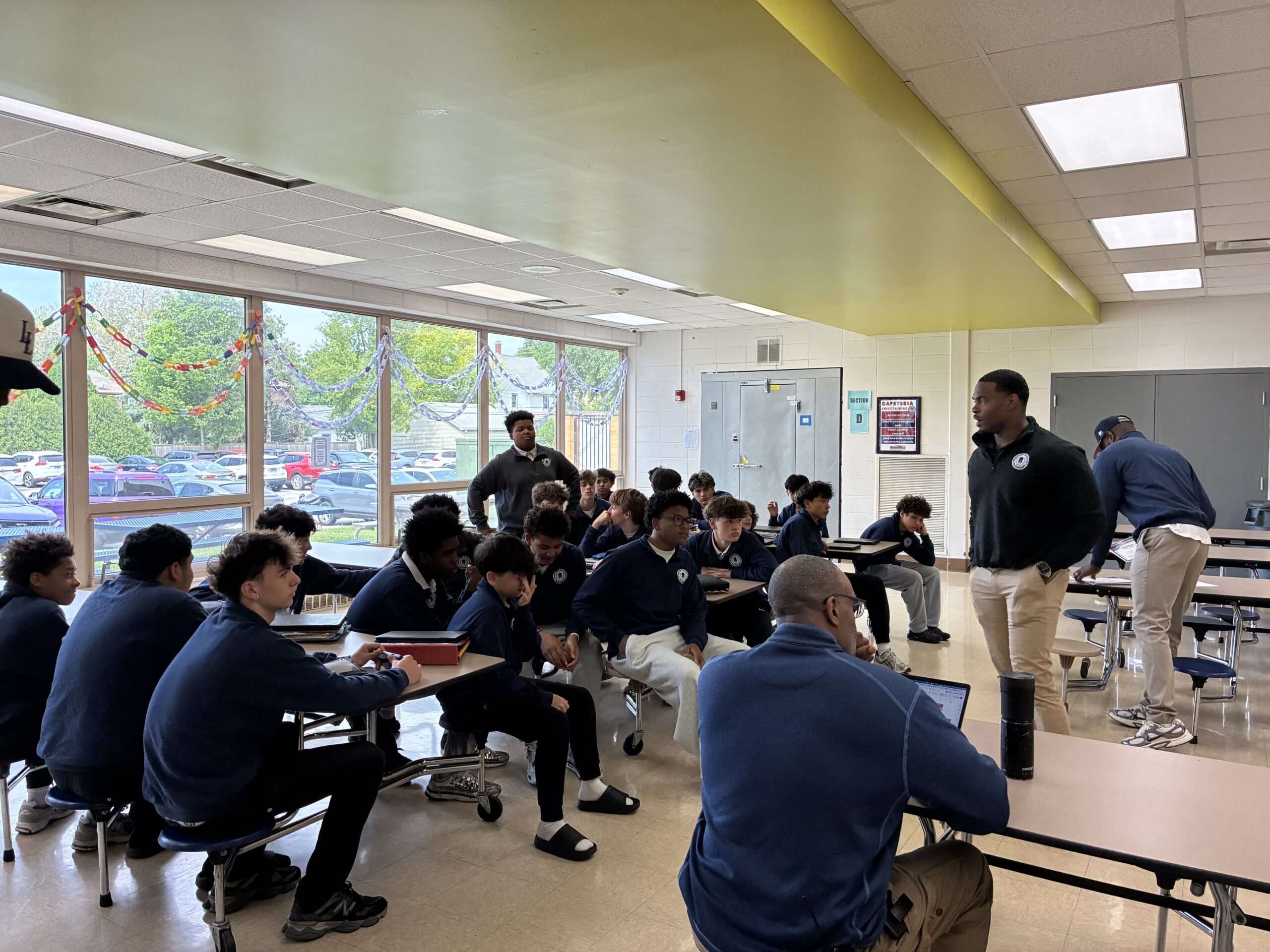
Students participate in a session of the Men’s Mental Health Warrior Academy during the school day (Photo provided by Cathy Pierson of the Township of Lyons Mental Health Commission).
By: Leah Mini – Managing Editor
In 2008, July was nationally declared Bebe Moore Campbell Minority Mental Health Awareness Month. This holiday was established through a resolution sponsored by U.S. Rep. Albert Wynn. The goal of naming this month was to raise public awareness of mental health challenges affecting underserved communities and honor the legacy of Bebe Moore Campbell.
Campbell founded NAMI-Inglewood in a predominantly Black neighborhood after struggling to get mental health support for her daughter. She wanted to create this space to build an environment that felt safe for people of color to talk about their mental health concerns.
Campbell advocated for decreasing barriers to accessing mental health for underserved communities. She observed that the cultures and lived experiences of many communities were not reflected in the existing healthcare systems. This contributed to continued stigma and a lack of mental health care within communities of color.
Samantha Malone is the community education coordinator at NAMI Metro Suburban and a member of NAMI’s in-house diversity, equity, and inclusion board. As community education coordinator, she went into schools, summer camps, and businesses in the community to present on any mental health-related topics requested. These may include mental health conditions, warning signs, preventive measures, and emotional regulation.
“We are getting the college community engaged in their health and educating them,” Malone said. “Having events and different types of resources that students can use, especially when you’re looking at those finals or those stressful periods of time, are so important.”
She said that minority mental health is important to acknowledge because historically, studies have not focused on the intersectionality of mental health and minorities. The definition of minority mental health is expansive. It includes demographics such as race, socioeconomic status, and religious identity.
“I think it’s important to understand all of the different factors that go into play when making up someone’s mental health,” Malone said. “When you would diagnose a white person with schizophrenia, you would have to look through a different lens to then diagnose a person of color with a similar or completely different self-condition.”
An individual’s culture and background can influence how warning signs show. Malone said that some students may self-isolate and others may act very extroverted, but both could be connected to the same mental condition.
Culture and background can also impact help-seeking behavior. According to the FDA, less than half of African American adults received healthcare in 2020, and Asian Americans were 60% less likely to receive mental health treatment compared to non-Hispanic Whites. The FDA cited lack of health insurance, limited accessibility, and stigma as some of the primary obstacles.
“There’s definitely a stigma,” executive director of community outreach and education at the Lyons Township Mental Health Commission, Cathy Pierson, said. “For some, it’s a question about doctors and getting medication help. For others, it’s about religion. But, in general, it’s about building a relationship with someone you trust to seek help from.”
Malone said she observed how these factors also create different experiences for students of color at colleges while working with Triton College.
“Even if they’re in the same socioeconomic bounds, [college] can look different,” Malone said. “For students that have any type of cultural hurdles to get over in regard to going to college or breaking away from that norm, their mental health is 10 times more impacted by the stressors of college, whether it’s finals, finances, making friends, just feeling involved, or getting used to that environment being separated from their home. A lot of those things are amplified for a student of color versus a student whom they have always been told to go to college and understand how that works.”
According to studies on health-seeking behavior, people of color may not fully engage in mental health services because they feel a disconnect from the practitioners. Different types of therapies and services may be more influential than others.
“Culture plays a huge part in who you get help from,” Pierson said. “Some people might just want to keep things in the family.”
Of course, there are still limitations to their system. NAMI may not always have practitioners who look like them or are licensed to help them.
“They may not be able to find that exact person they can link to, but we also try to have other resources at hand,” Malone said. “We might know that we can’t give this person support, whether it’s a language barrier, cultural barrier, or a gender barrier, so we try to make sure we either have resources or someone vigilant enough to do the research to find that resource for the people that are coming into our different spaces.”
NAMI offers several services in addition to outreach, but they emphasize peer support. They have several Living Room locations, where individuals can walk in and talk to trained NAMI support specialists for free.
“NAMI being open 24 hours means that you don’t have to go by yourself,” Pierson said. “NAMI makes it really accessible for people; they don’t have to call for an appointment.”
When an individual visits NAMI, the staff listen and provide coping strategies for individuals who can talk about their mental health challenges. Malone said that seeing others who can relate to your identity can help make individuals feel a bit more comfortable.