
“Navigating Neurodiversity” workshop series reframes neurodiversity in terms of strength
By Leah Mini – Managing Editor
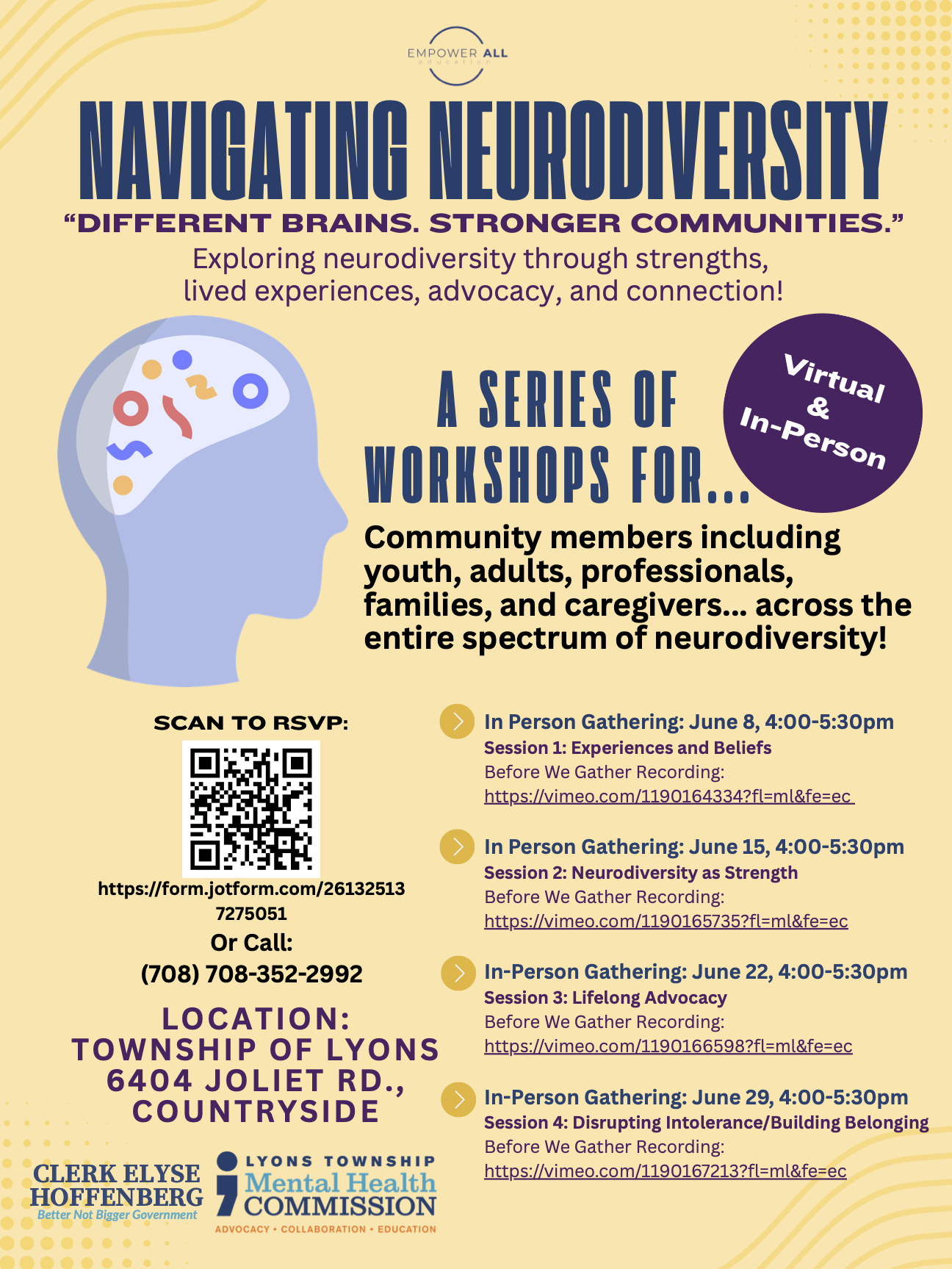
On June 15, the Lyons Township Mental Health Commission hosted the second session of its four-part series, “Navigating Neurodiversity.” The workshops were held every Monday in June at the Township of Lyons.
Empower ALL Education founder Brittany Holm leads the workshops and engages attendees in presentations, roundtable discussions and activities to help them better understand how different brains process the world.
“We have influence over making our spaces accessible,” Holm said. “We should be conscious of how everyday experiences might feel for those with different sensitivities and executive functioning.”
Neurodiversity refers to the concept that all brains are naturally diverse. This definition frames commonly identified neurodivergent conditions, such as autism, attention-deficit/hyperactivity disorder, and dyslexia, as natural variations rather than deficits. It is estimated that approximately 20% of people are neurodivergent.
In her “Neurodiversity as Strength” workshop, Holm advocated for people to avoid describing neurodiversity as a deficit. Instead, she recommended that neurodiversity be framed in terms of strengths. For example, strength-based reframing may refer to inattention as hyperfocus or transferring attention elsewhere.
“I remember one of my professors telling me it’s not inattention,” Holm said. “The attention is somewhere, but just not on the task that we are hoping that the attention is on.”
From Holm’s experience as an educator and consultant, small language changes make a huge difference for fostering inclusion in the classroom. Using strength-based reframing can reduce stigma around neurodivergent conditions and make those individuals feel less excluded.
Holm is dedicated to fostering inclusive learning environments for children with special needs. She invites community members to learn about a new topic that surrounds experiences, strengths, advocacy and connection with neurodiverse individuals. In the classroom, Holm recommends that teachers ask questions about what level of engagement neurodivergent students would like to have.
“My approach is to ask questions, seek to understand, and go from there,” Holm said. “What behavior can we expect? What can we accept? Are those different?”
Strength-based reframing is also significant because it affects available community resources. According to a study by the CDC, autism spectrum disorder prevalence increased from one in 150 in 2000 to one in 36 in 2020.
Lyons Township Mental Health Commission community support specialist Emmie Crement points out that this correlation does not necessarily mean cases have increased. Rather, heightened awareness and new definitions of symptoms may have led to more individuals being evaluated.
Overall, Crement said these statistics should not be a cause for concern.
“You are being diagnosed to be connected to support,” Crement said.
These numbers can inform educators on how to create a classroom that is inclusive of all students’ needs. Additionally, agencies, such as the Mental Health Commission, will fund other organizations through grants to support classroom development.
Holm thanked the attendees for being open and engaged during workshops.
“This is a reminder we’re all doing our best and need to have a little more empathy.”
For those who cannot attend the in-person sessions, pre-recorded versions of the workshop are available online. You can also find events held by the Lyons Township Mental Health Commission at ltmhc.org.